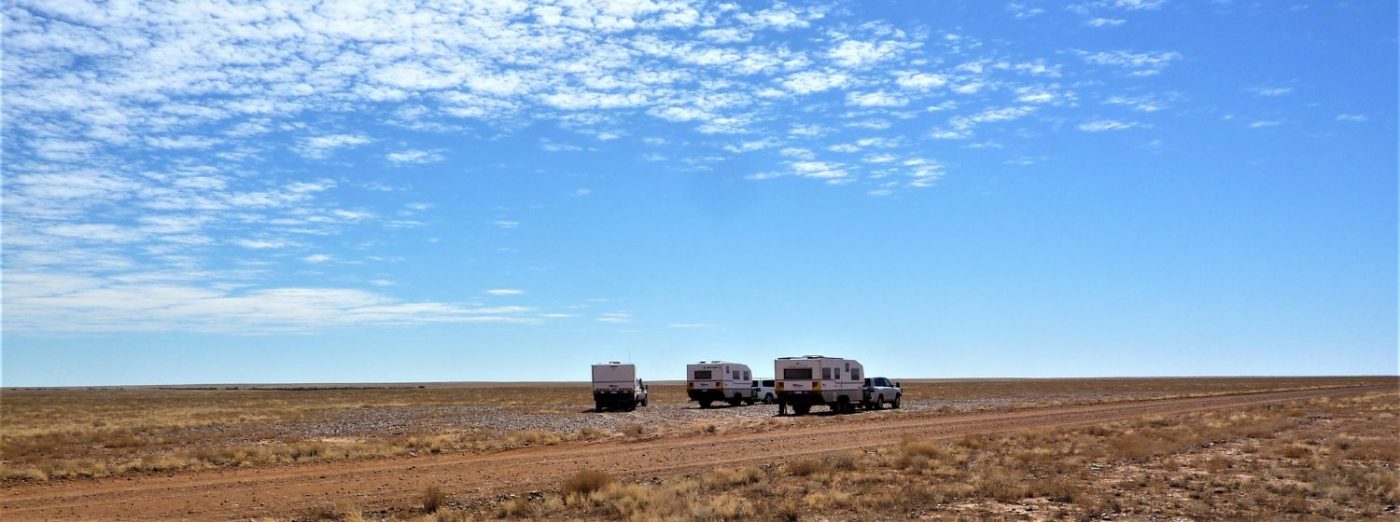
Monday 13th June
Well we’re, as the song goes, ‘back on the road again’, though a bit delayed by covid (Pat) and the weather. So here we are an end of May departure beginning on the 13th of June, with the need to be back by the end of July to get things organised for Roger’s Dad’s 100th birthday on August 28th.
We have no real plan though we had thought to head for the goldfields, an area we travelled through but not really explored. However, they have had a significant amount of rain through the East Pilbarra, Murchison, Gascoyne and central areas that we’re not sure what state the the roads are in, particularly the dirt roads. So we decided that we would head out east and then north to avoid Perth traffic and the the Great Eastern Hwy.
We realise that most of you just look at the pictures and avoid our eloquence in the text, so this time we will try to include more pictures! Perhaps some feedback might help us here?
Since we didn’t get away until 1300 and had had a very busy morning we decided to stop just outside Narrogin at a place called Railway Dam.
You should be able to expand these so that they are readable.
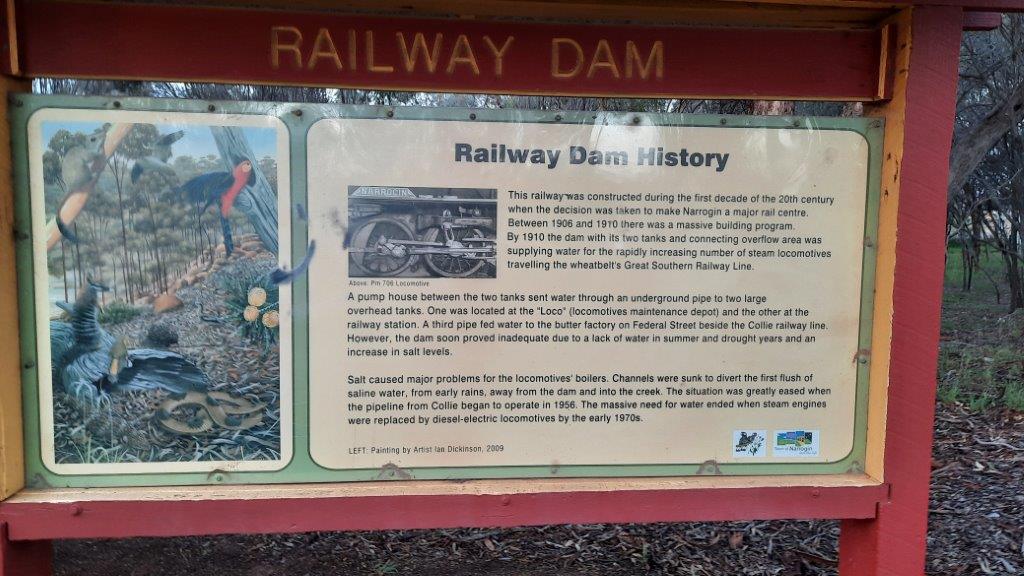
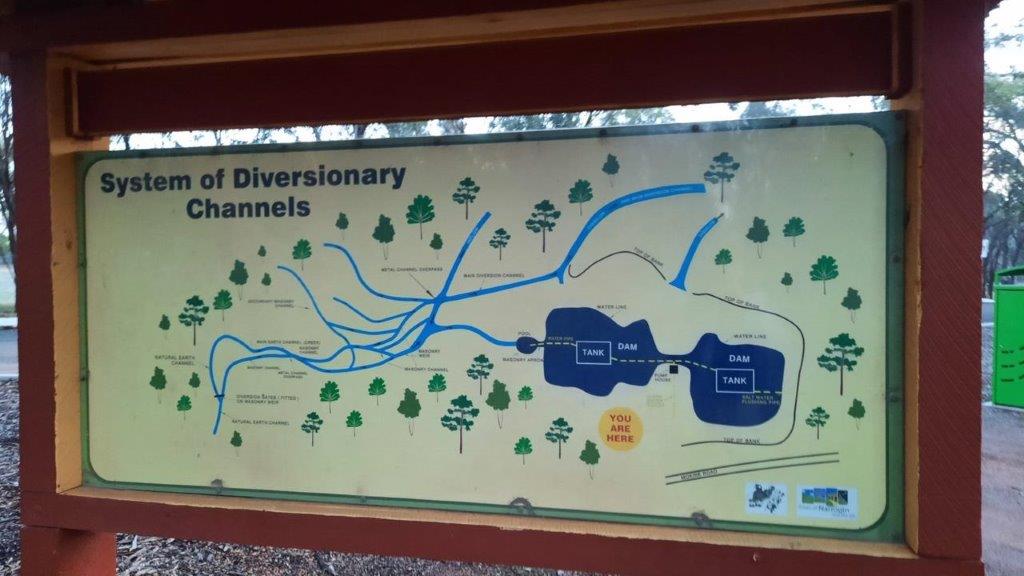
The dam is pretty ordinary but it is not an unpleasant spot, though it was difficult to find a level bit! We were surprised at how little water there was in the dam considering the amount of rain that has been around recently. There is a pleasant walk round the dam and a seat with a difference.
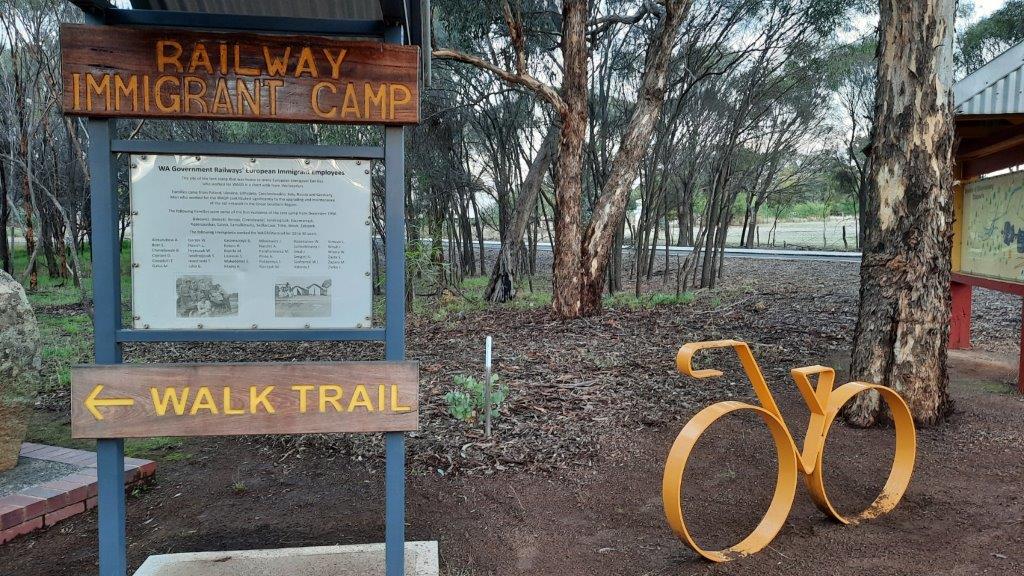
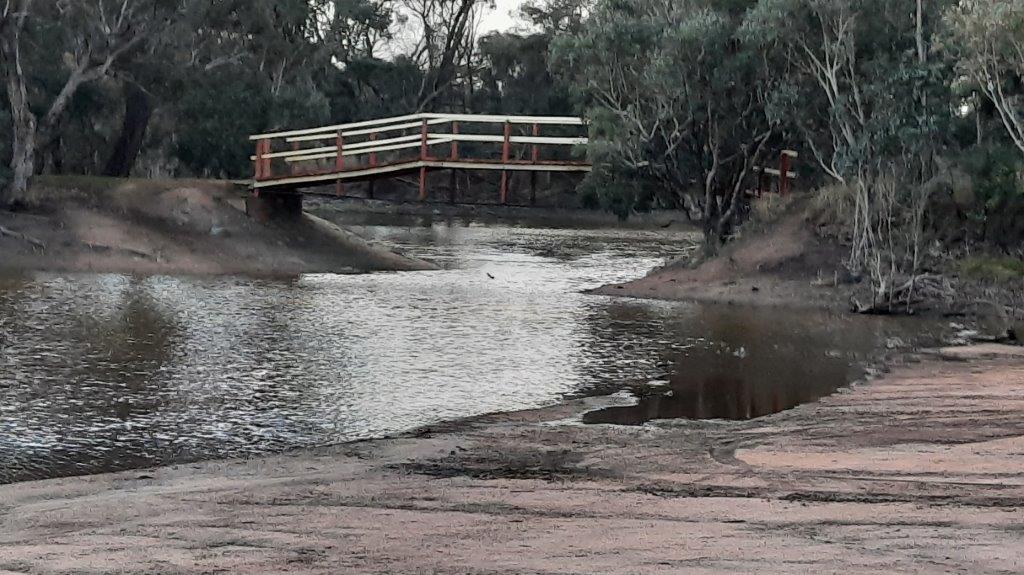
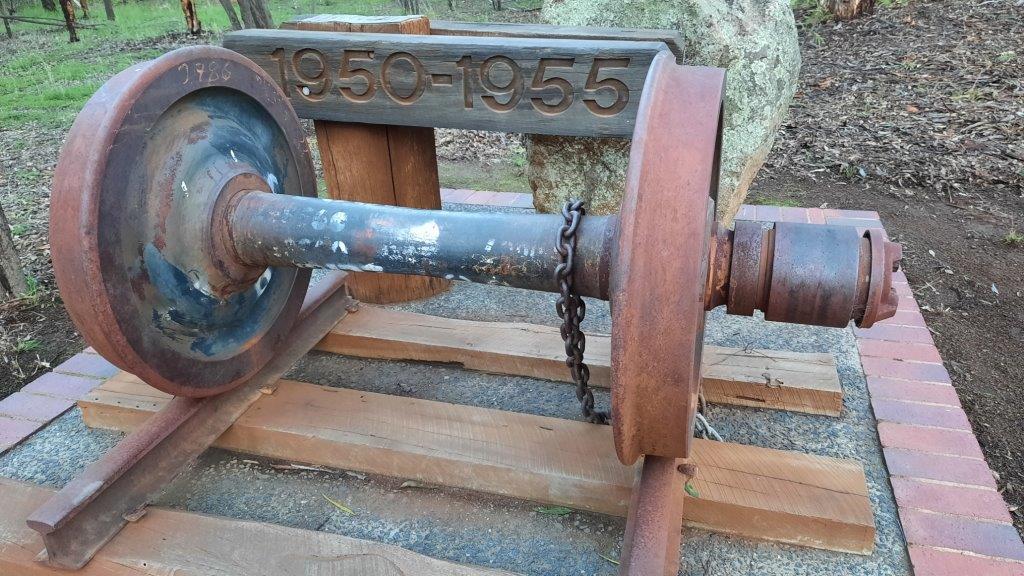
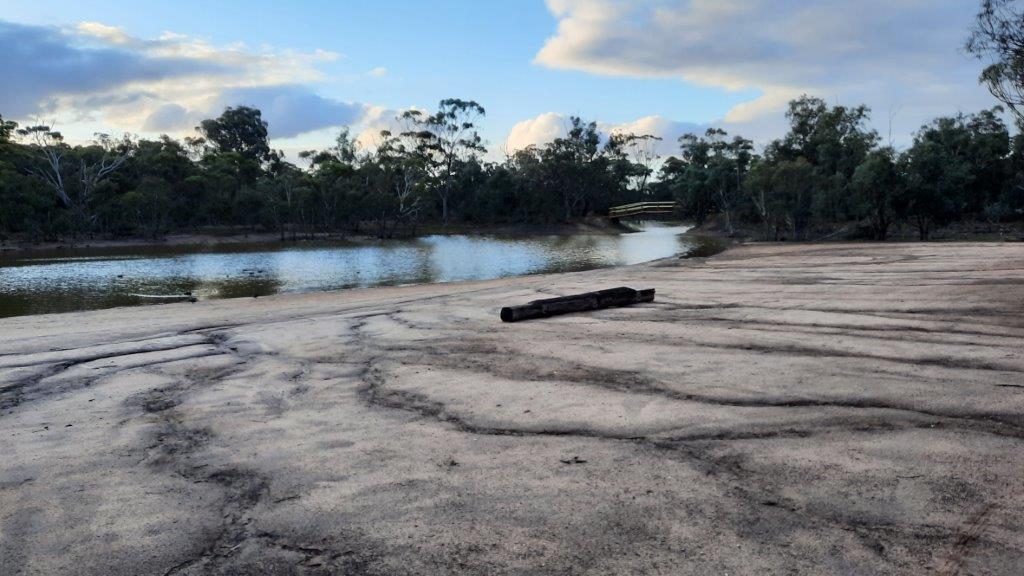
There two very clean BBQs and tables and this interesting piece of kit! What is it? Answers on a $10 note.
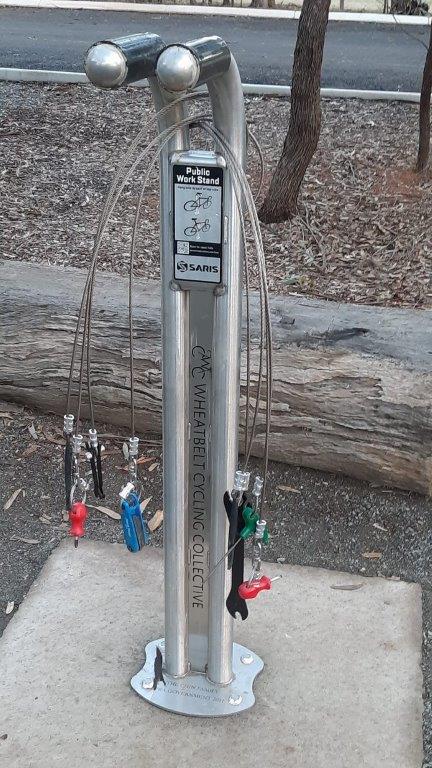
I guess that the picture and dedication
rather gives the game away even if you don’t
recognise the devices hanging on the post!
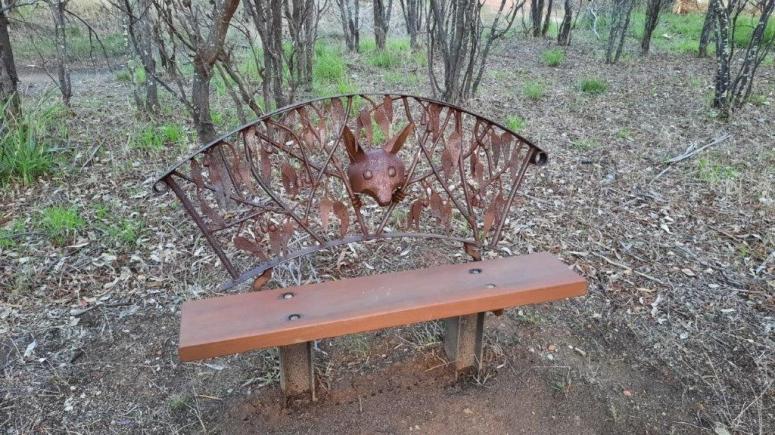
We walked round the dam but didn’t sit on the seat even though there was only two of us, you wouldn’t want to be the one in the middle!
We only stayed one night which was quite cold but without rain!
Tuesday 14th June
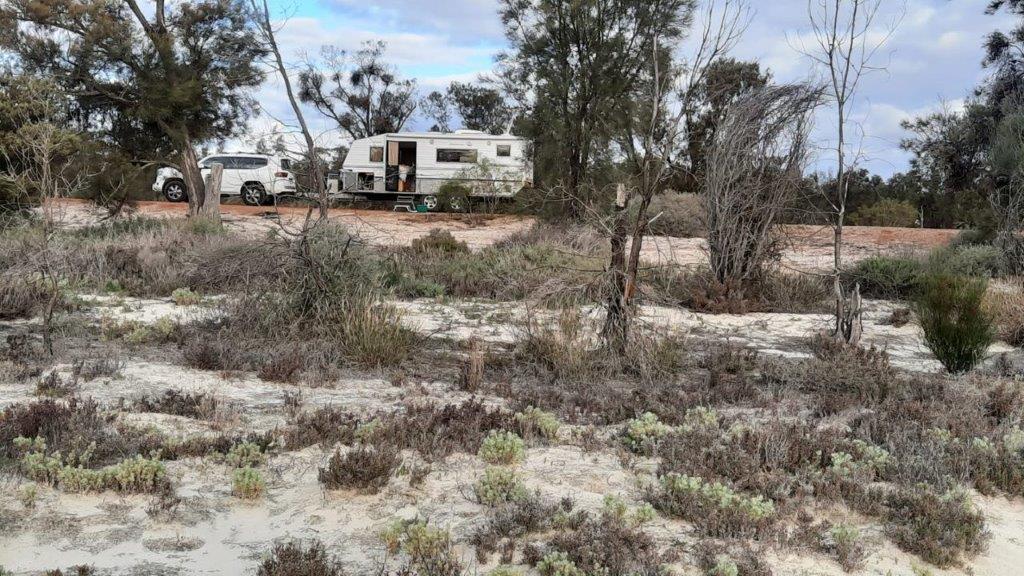
A very leisurely start this morning heading north towards Northam, taking morning tea at Kulyaling old school site. At Northam we passed under the Great Eastern and stopped for lunch just south of Goomalling. Pat had found a spot that looked pretty good to the south and east of Wongon Hills on Lake Ninan. The site is a flat graded area about 500m long by 50m, today there is one other vehicle here but they are at the western end. The lake seems to be a clay pan but with a fair amount of salt in it.
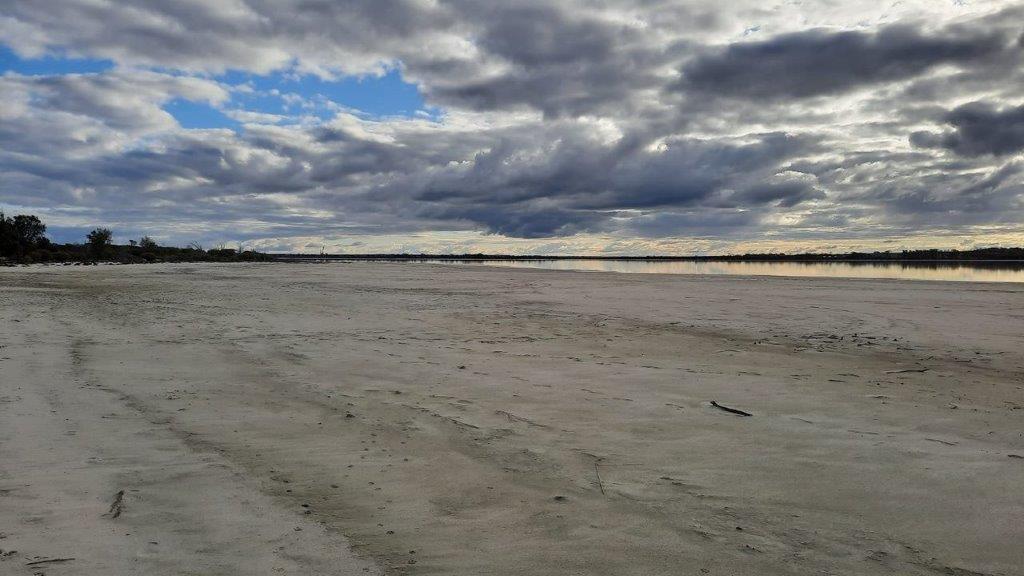
We decided this was a good spot for the night and got ourselves settled. It was bit later than we usually stop for the night but the sun was still shining, the wind wasn’t too strong and it was pretty quiet, what more could you ask for? Even had time for a sit down in the sun with the crossword / sudoku!
The sunset was pretty special;
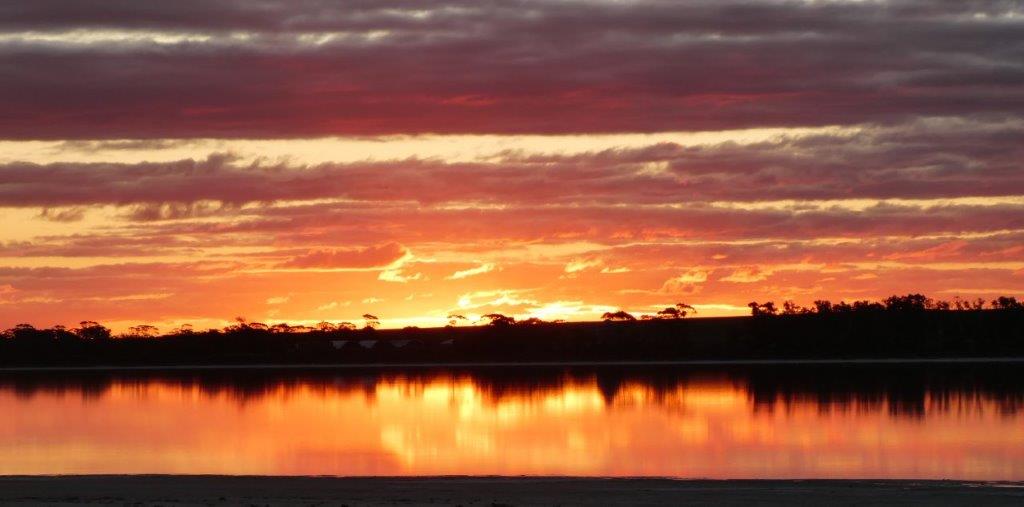
We slept well and the diesel heater came on at 0700 so it was nice and warm when we got up.
The sun was shining this morning but the wind was a bit stronger. We decided to go for a walk, head into wind outbound, so it was a bit easier on the way back. We noted that there were very few indications of birds or other wildlife which is unusual around water sources, even salt lakes. We enjoyed the hour or so walk.
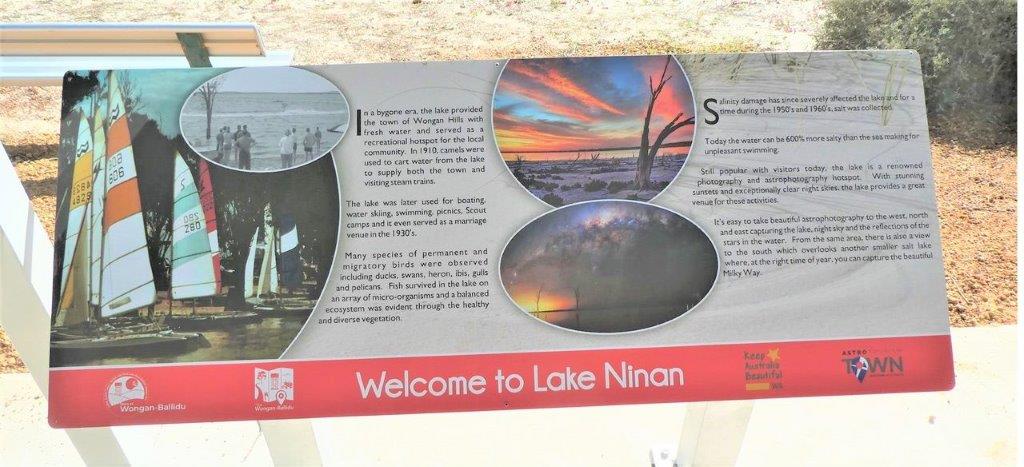
If you read the board on the left you’ll see that less than 100 years ago this was a fresh water lake used for sailing, swimming and other water sports but it was also used for water supplies to the surrounding towns and communities. The right side shows what it’s like now!
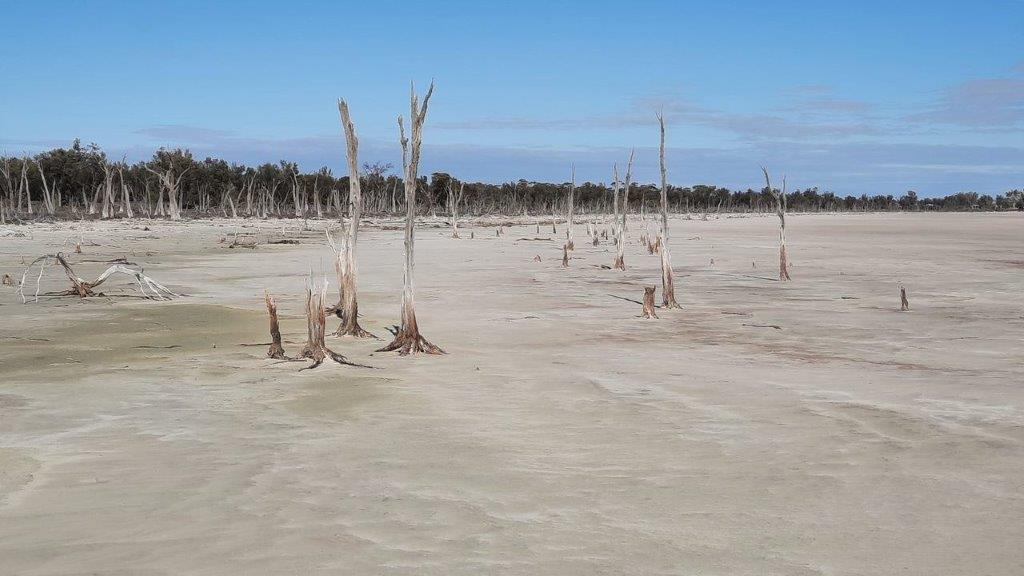
So all you people in WA and elsewhere in Australia who want nice green lawns in the summer, this is what you are doing to an underground reservoir near you!
Another beautiful day, another walk, another sunset and another bright moonlight night. Actually, we had the full moon on Tuesday, a supermoon, I think.
We managed to break the shower slider last night, not irrevocably but will need to dig out the gaffer tape I suspect.
So the moon by day and the sun by night!
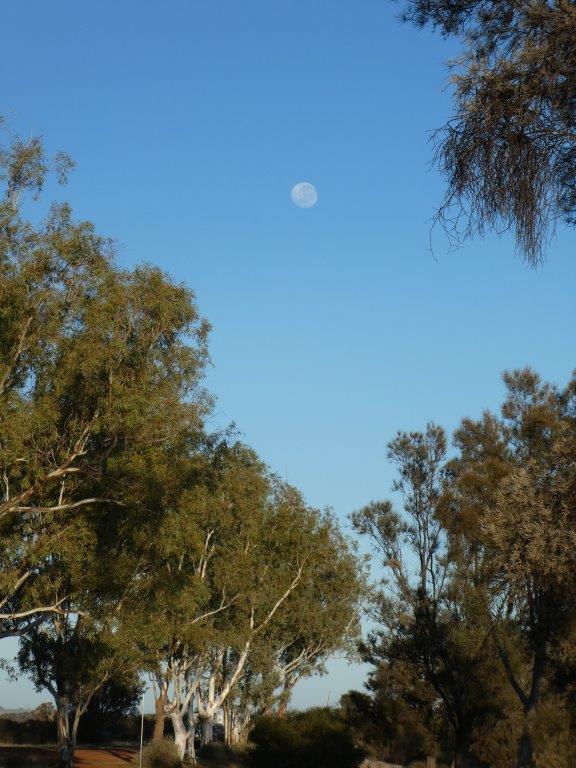
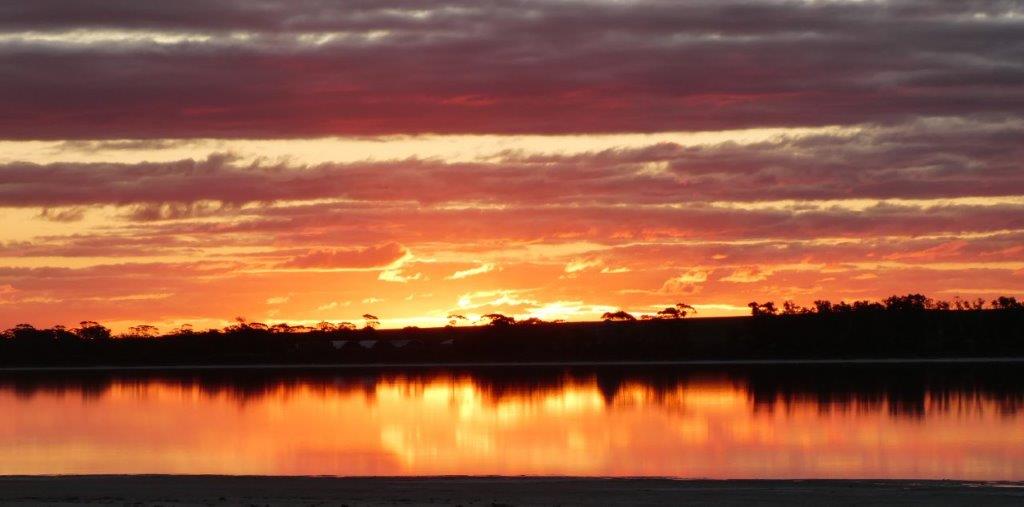
We’ve stayed here and enjoyed the rest but we’re leaving tomorrow, Friday, to see if we can find somewhere equally pleasant.
Friday 17th June
Unfortunately, no! We headed north after trying to replace the shower in Wongan Hills, they nearly had the right bit! We tried again in Dalwallinu, who had even less stock than the previous store! Made up for it by having morning tea here.
It was looking pretty dark all round and as we pulled up for lunch it started to rain and continued for the rest of the afternoon, even whilst refuelling at Paynes Find.
Most of the stopping places up here are beside the main drag and with continuous truck movements can be very noisy up to midnight and then early in the morning. For tonight, Pat has found us somewhere about 2 ks off the highway. It doesn’t look too bad but we’ll need make sure that a bit of rain won’t make things difficult.
Saturday 18th June
Well the the Friday night pitch was OK even though we had a fair amount of rain.
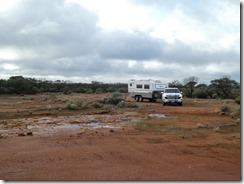
Saturday 18th June
In fact we had picked the right part of the clearing because a Troopy came in later and when we got up we could see that had had a bit of a problem getting out!
We set off back to the GNH and had a reasonably easy run up to Cue. We have been through here a few times but never stopped to have a look round.
This place is, like most of these old goldfields towns, very interesting. Cue was founded by one Tom Cue who found gold near what is now the Fire Station. Gold was discovered in 1892 and two miners dug up 260 ounces! Tom Cue found his own gold close by and rode 80ks to register his claim.
Within days 400 men had headed for the area, the community became a municipality in 1894 and the population quickly grew to 10,000.
Just down the road another claim was pegged and the turn of the century became the largest gold mine in Western Australia. A town grew here just 5 ks from Cue and at one point had seven hotels.
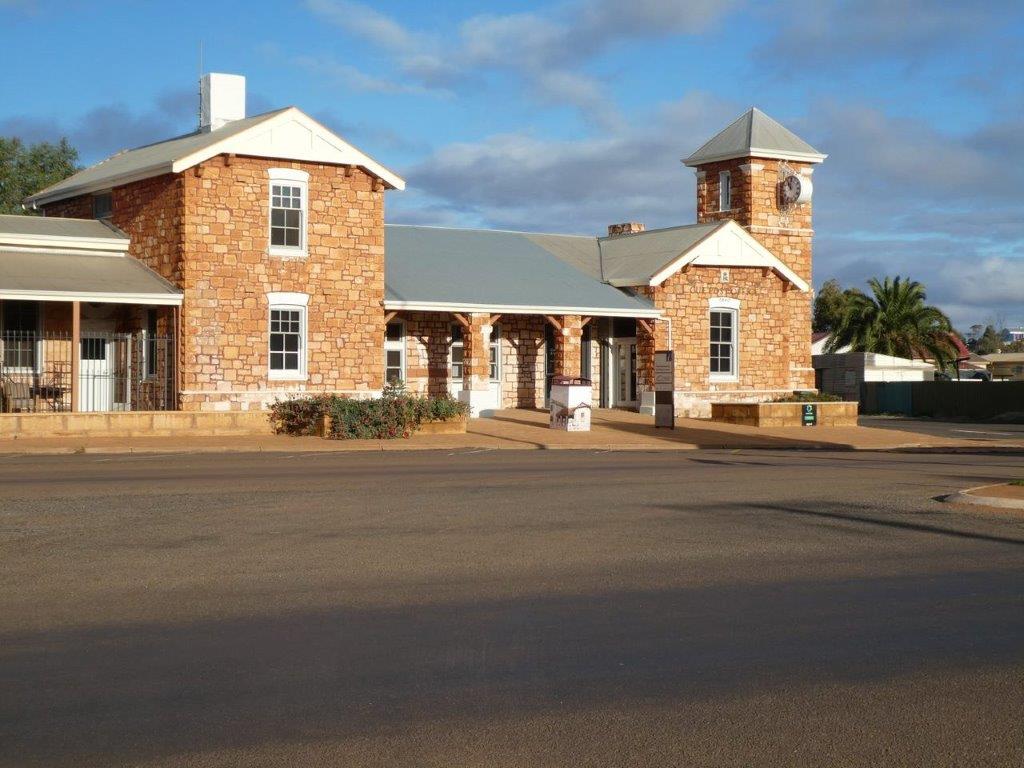
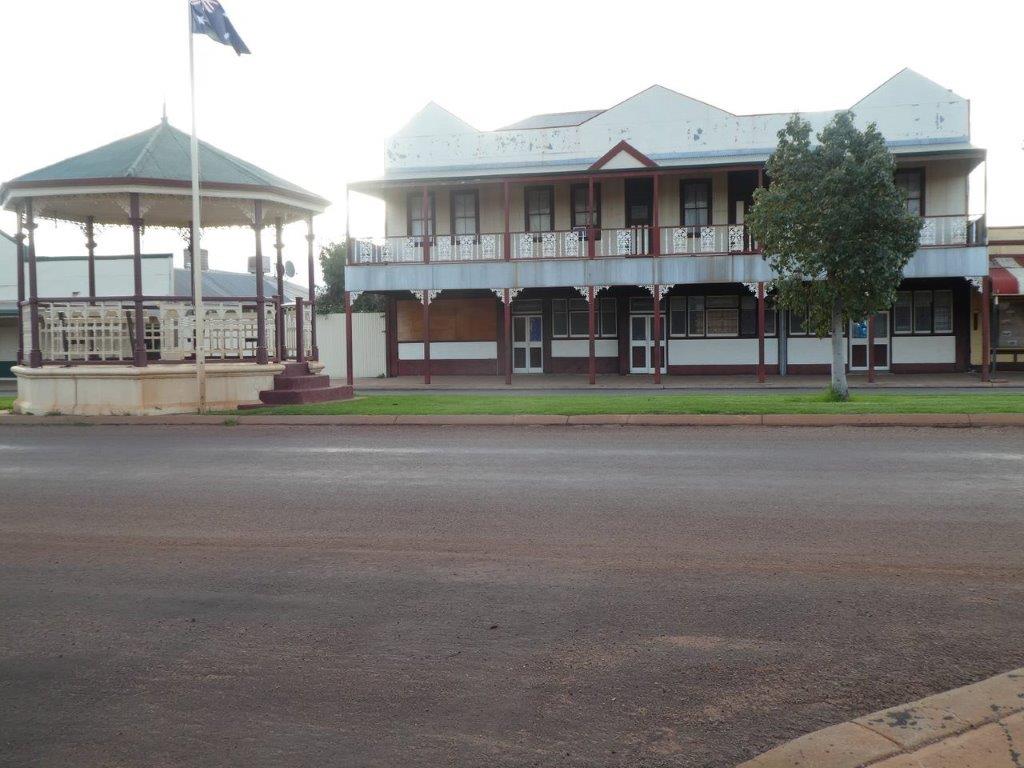
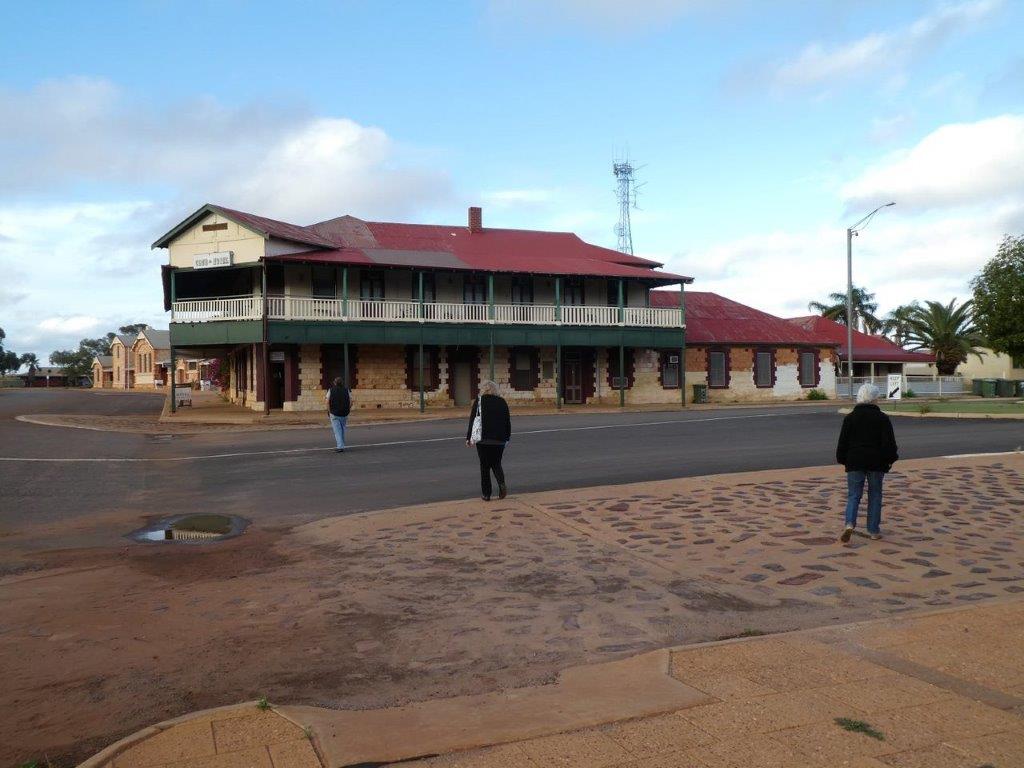
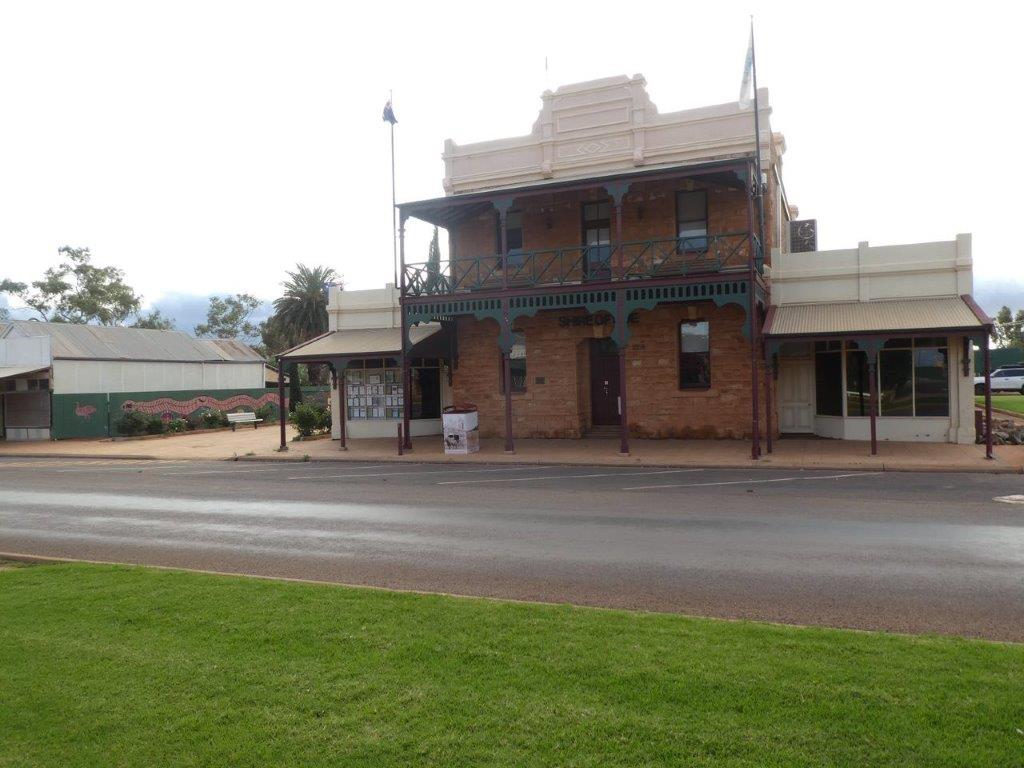
Having got settled in and had some lunch we went for a walk round the town. Some lovely old buildings remain and a lot of work has been done to some.
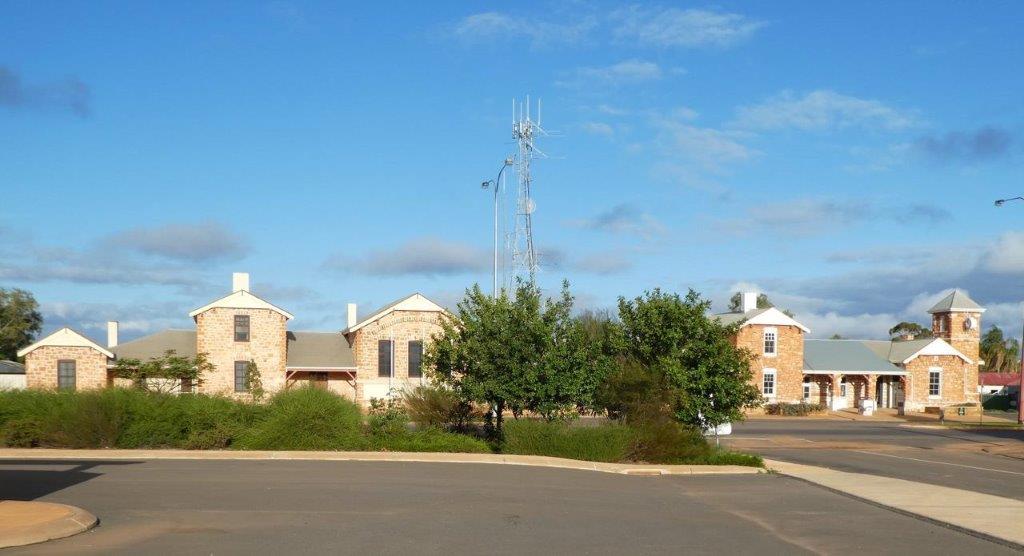
Old Government buildings now occupied by the Police and Visitors Centre.
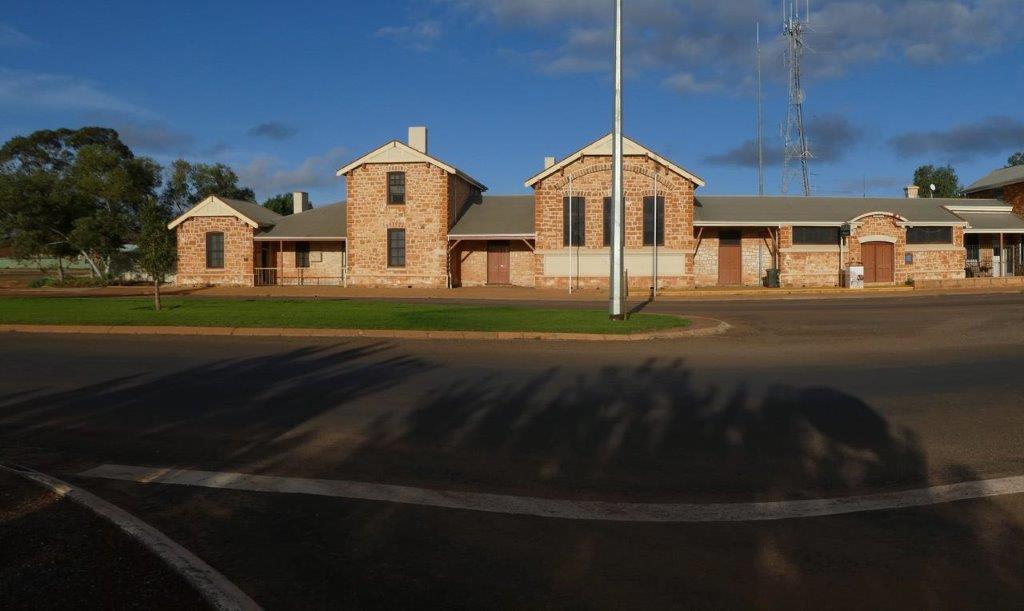
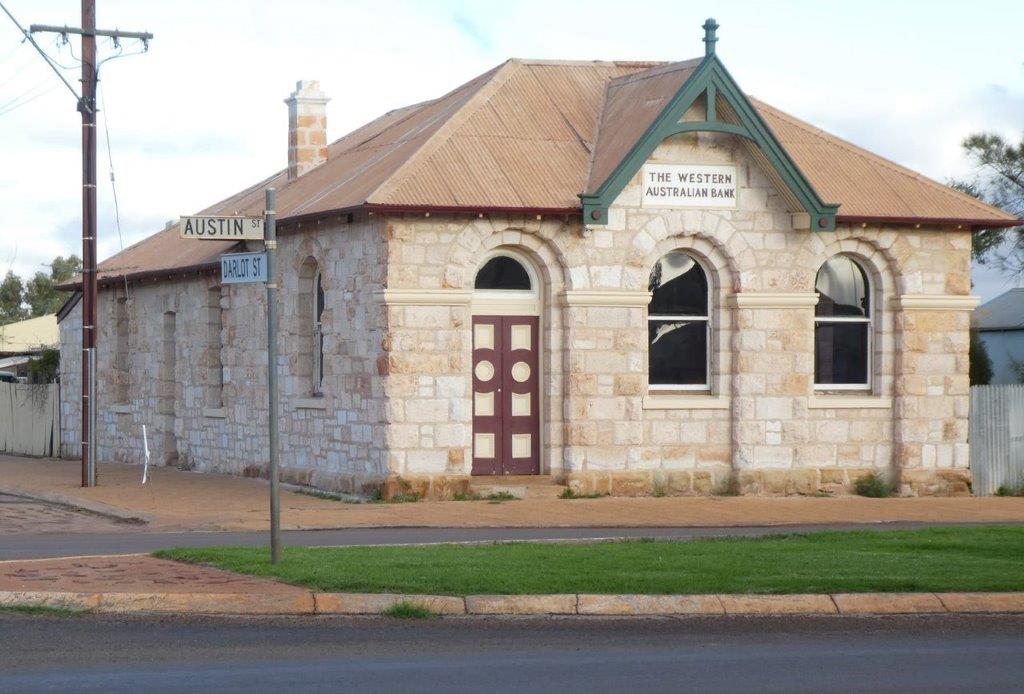
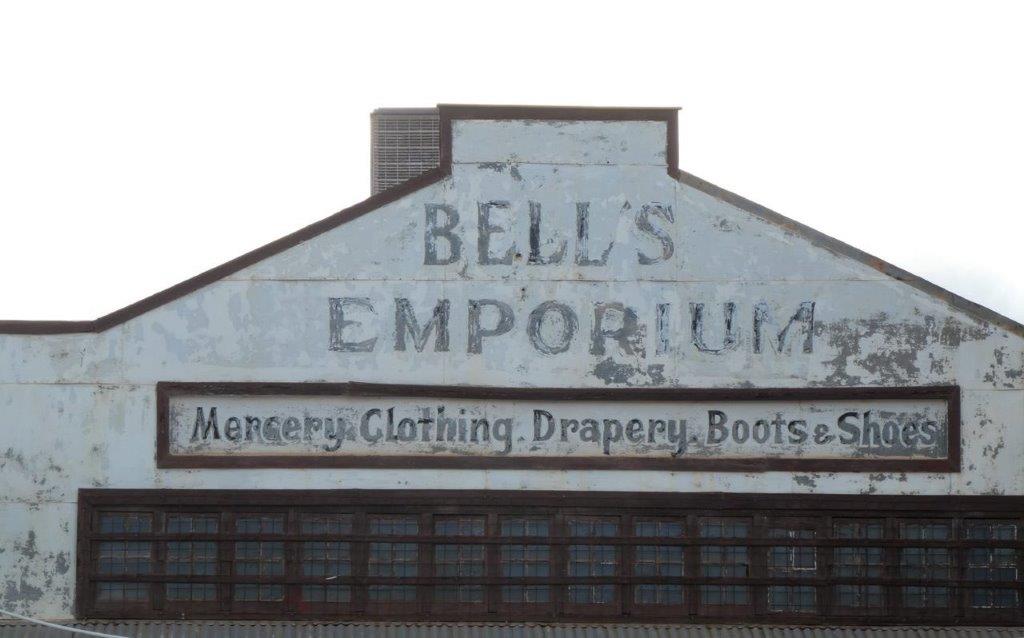
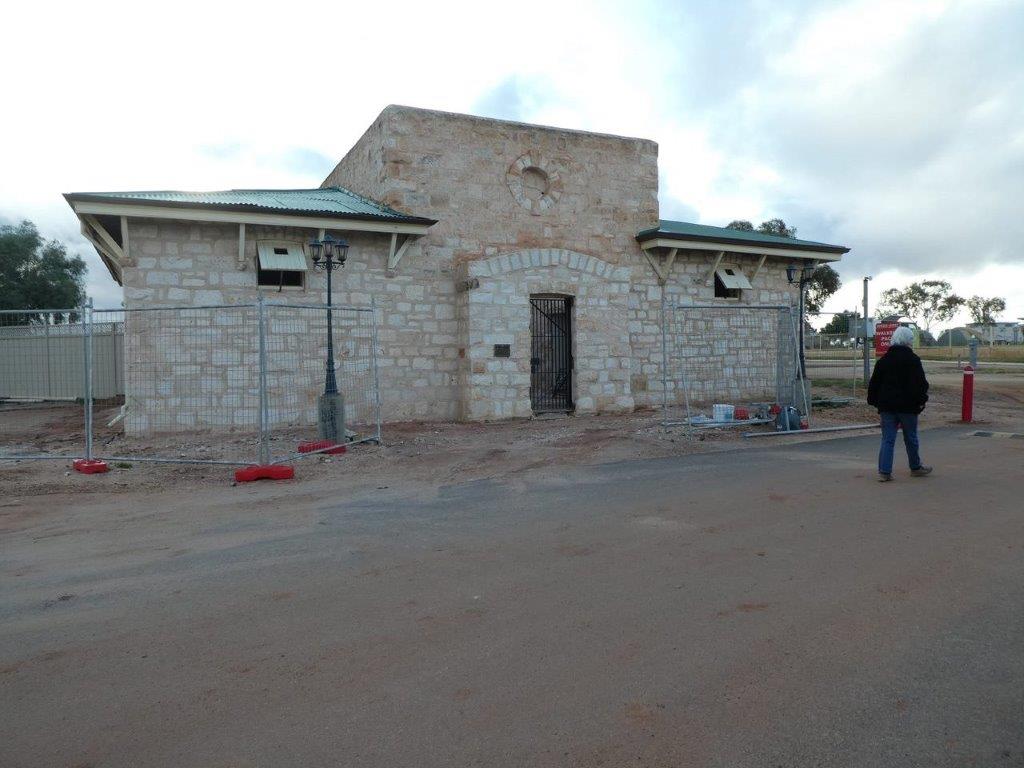
Sunday 19th June
Had to repair the shower this morning! It fell apart at Lake Ninan and it was only in Mt Magnet, at the Murchison Emporium, that were lucky enough to find one which could be modified ! Unfortunately, we couldn’t find an exact replacement but Roger was able to modify it.
So this morning armed with a hacksaw (borrowed from next door) the new shower was fitted and tested!
By this time it was lunch time but we did get out and about to grab some more photos for you!
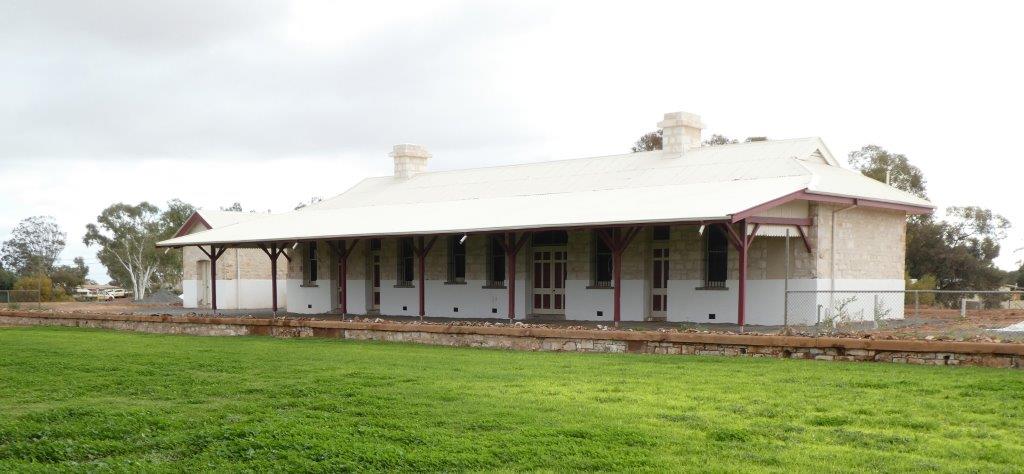
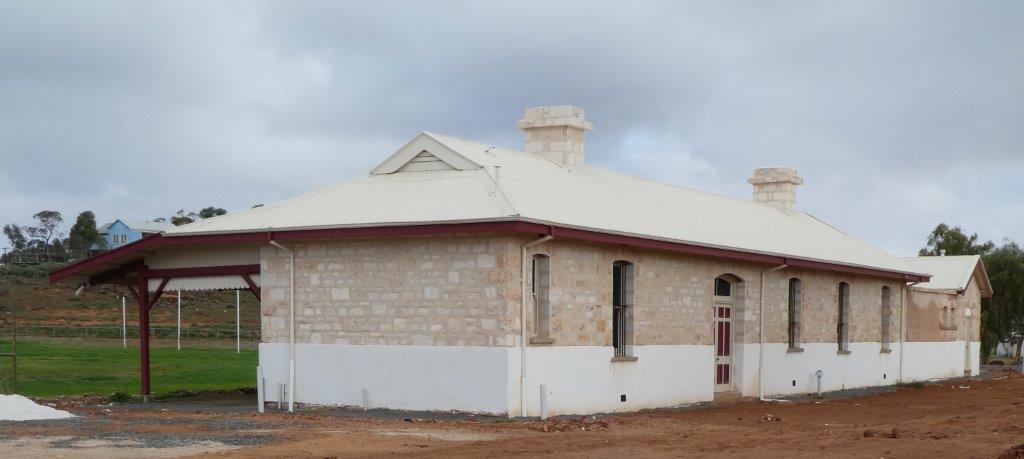
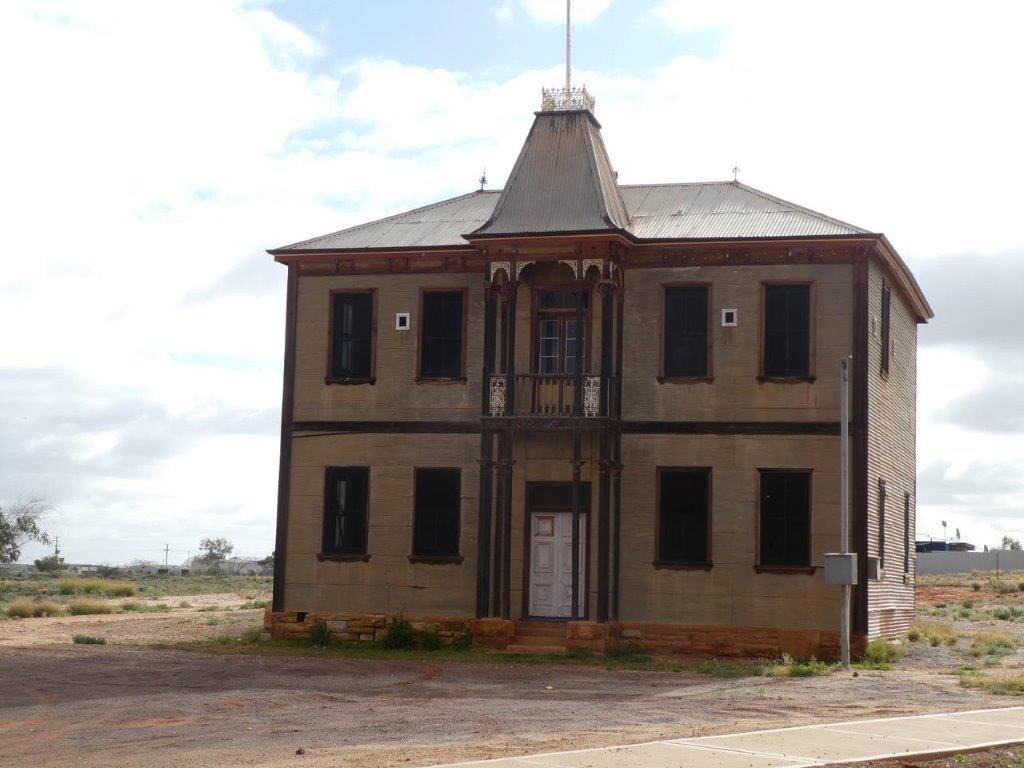
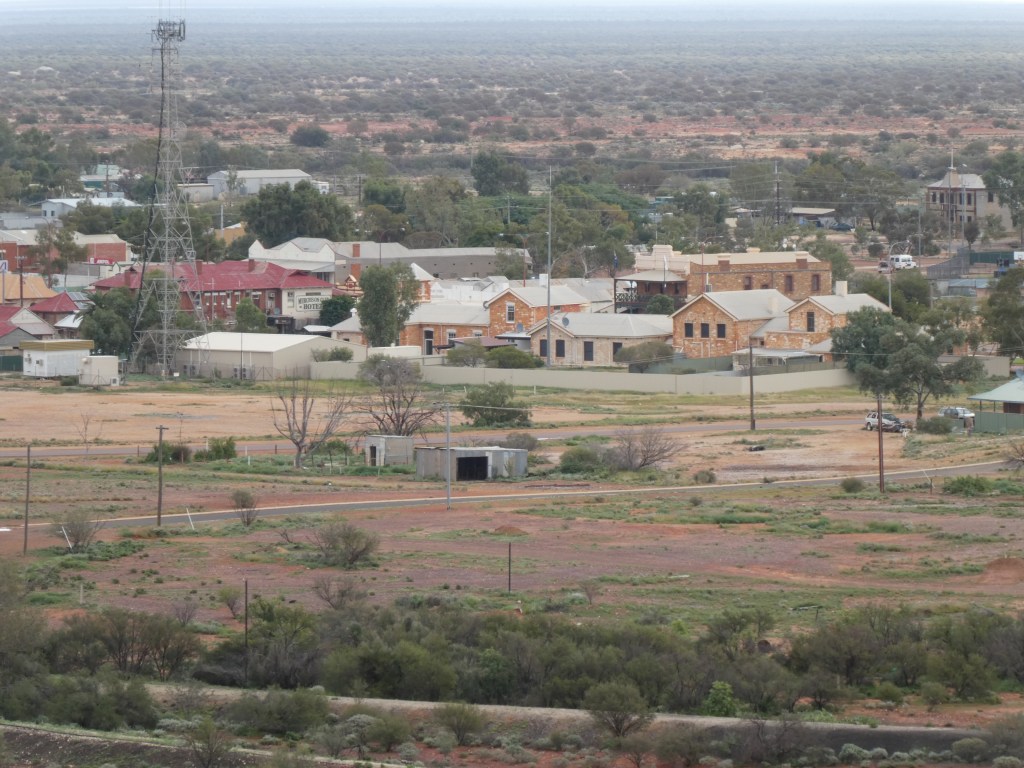
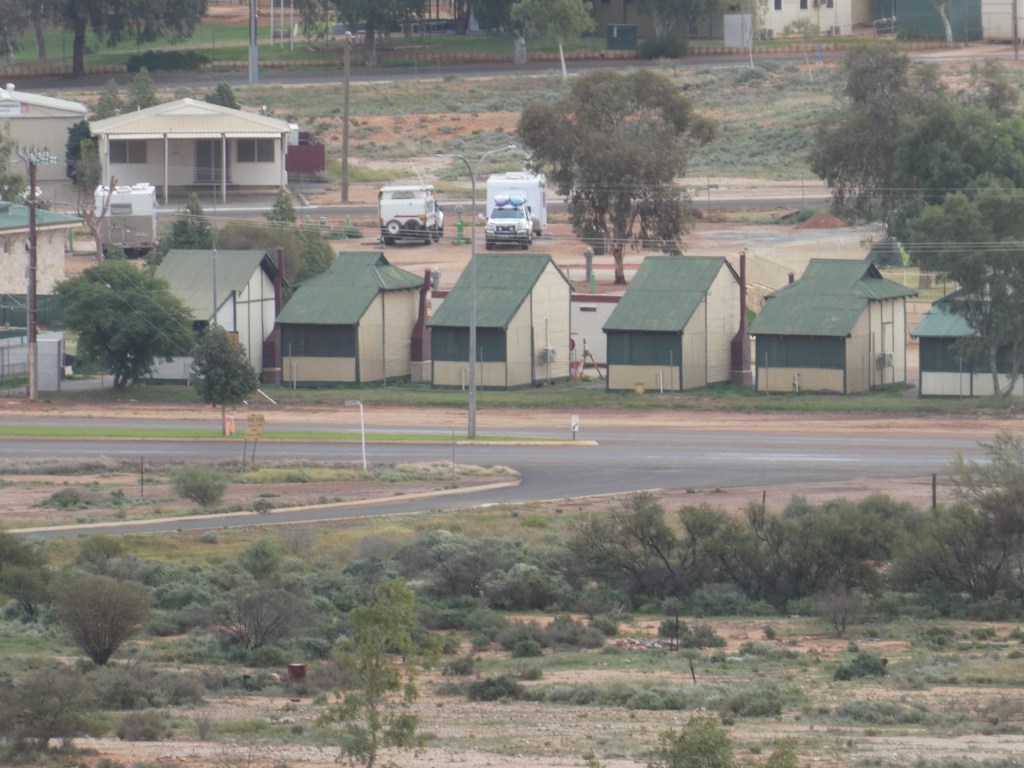
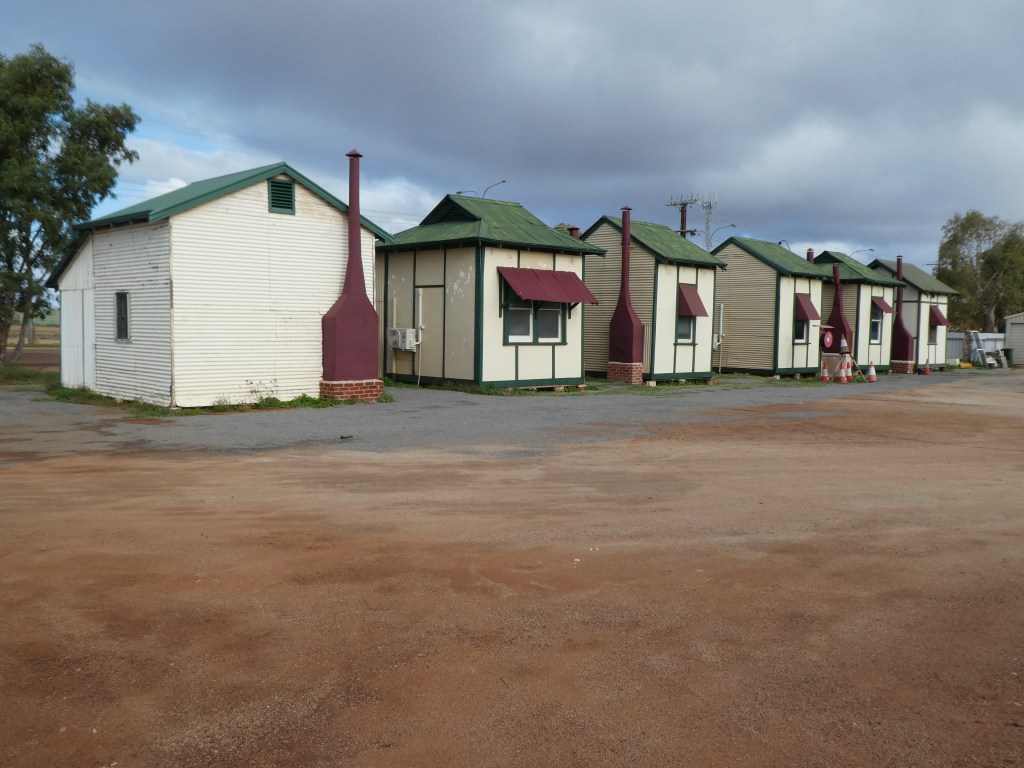
Hope there’s enough photos for you! There are more to come!
Monday 20th June
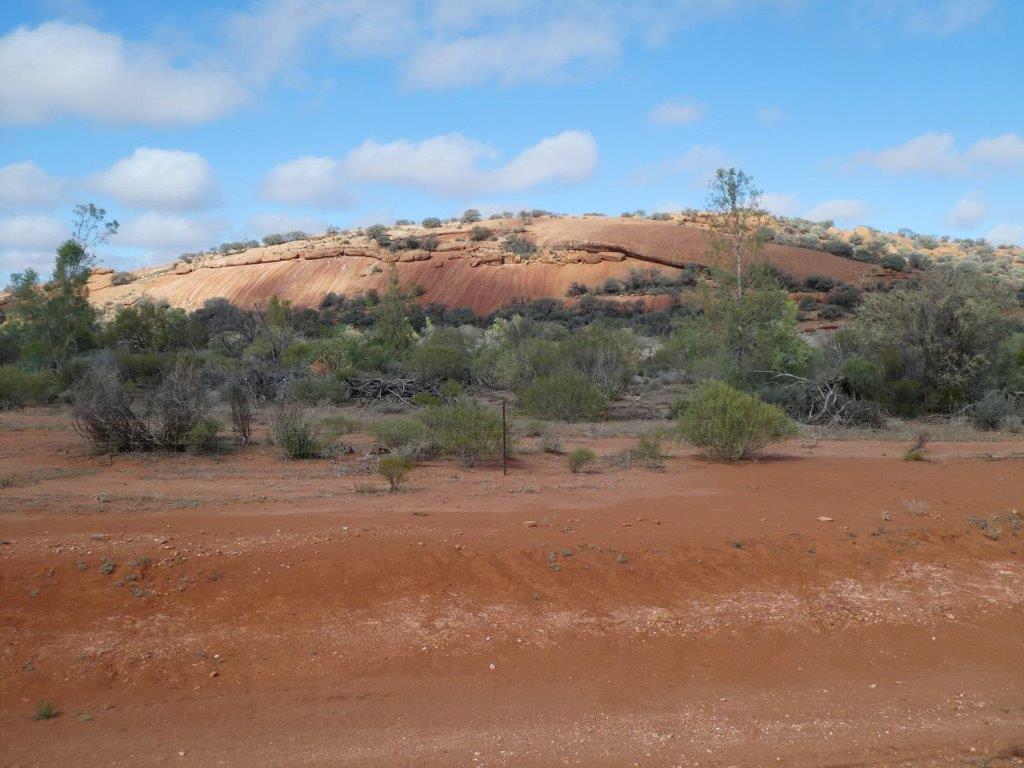
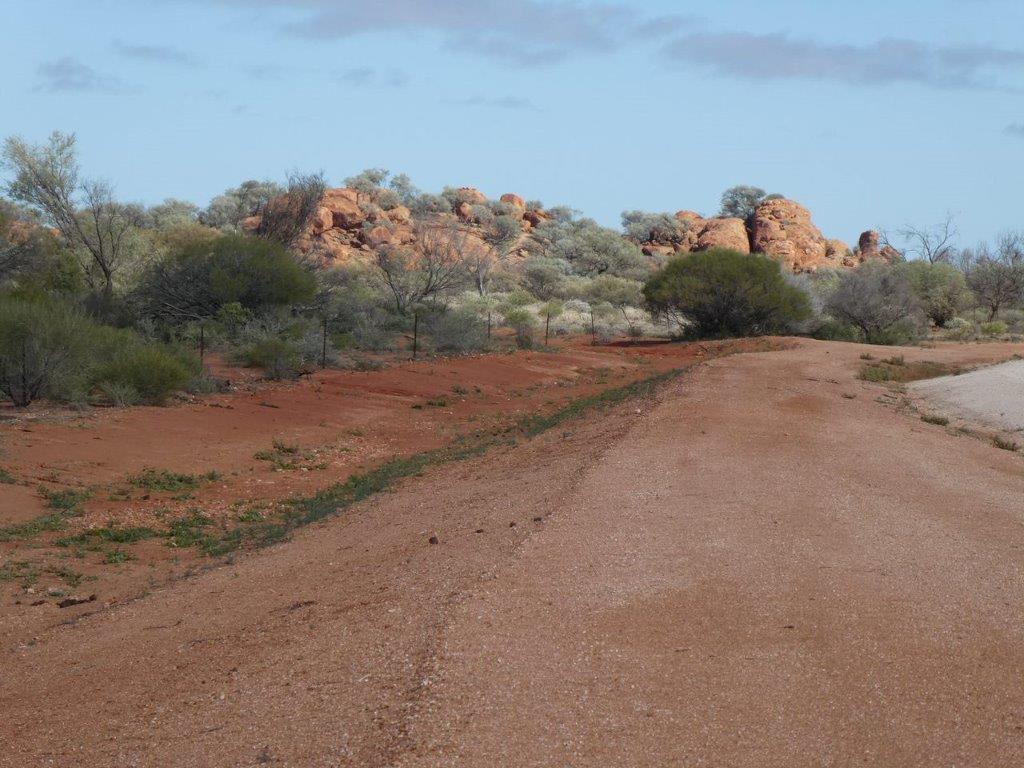
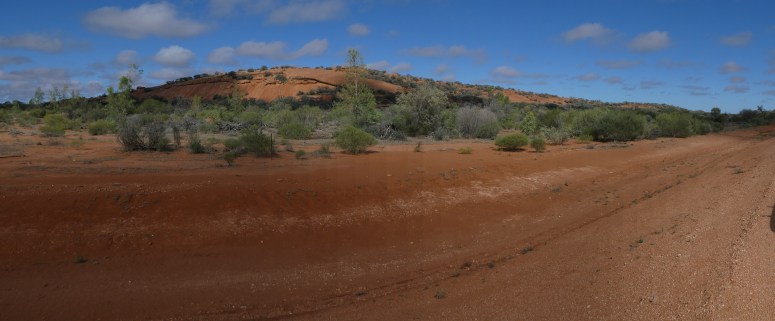
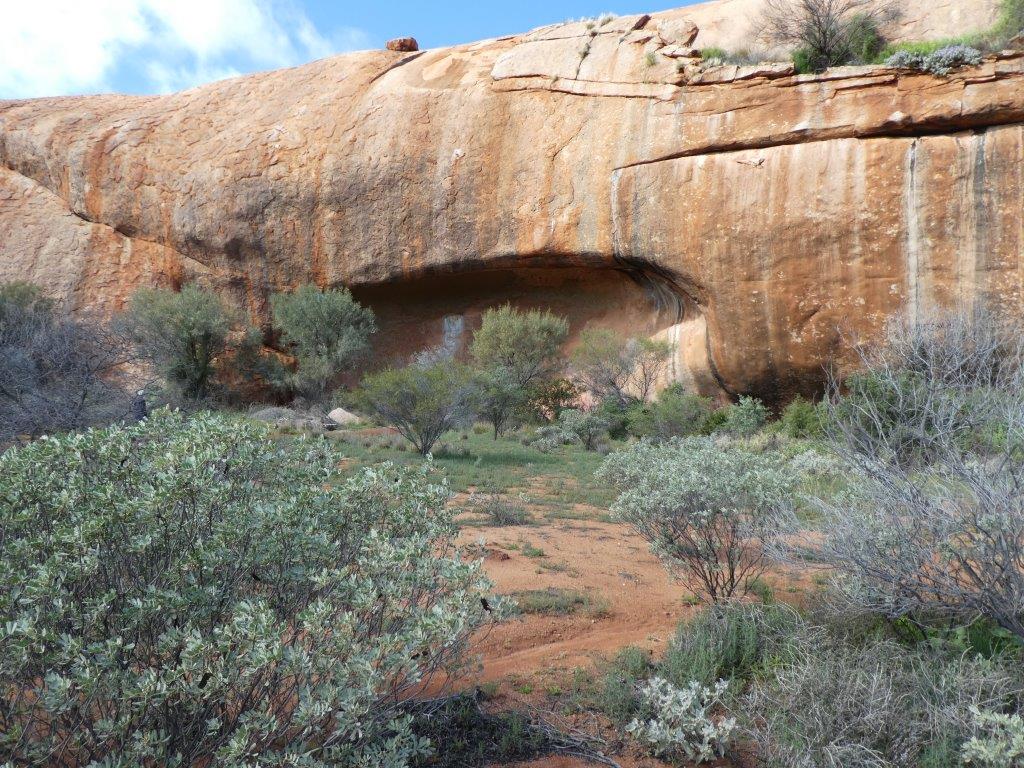
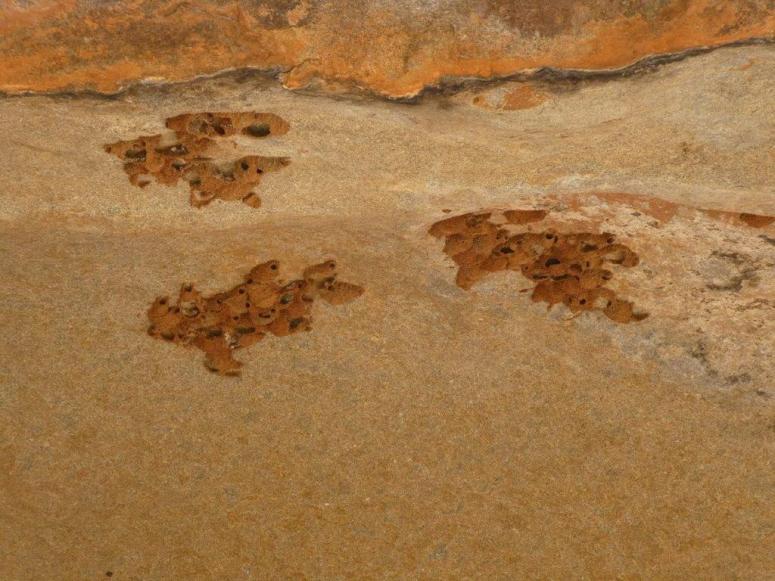
We’ve had three days here in Cue and this morning we went out to Walga Rock, where there are aboriginal rock paintings. Unfortunately time and weather have not been kind but some are still quite easy to see.
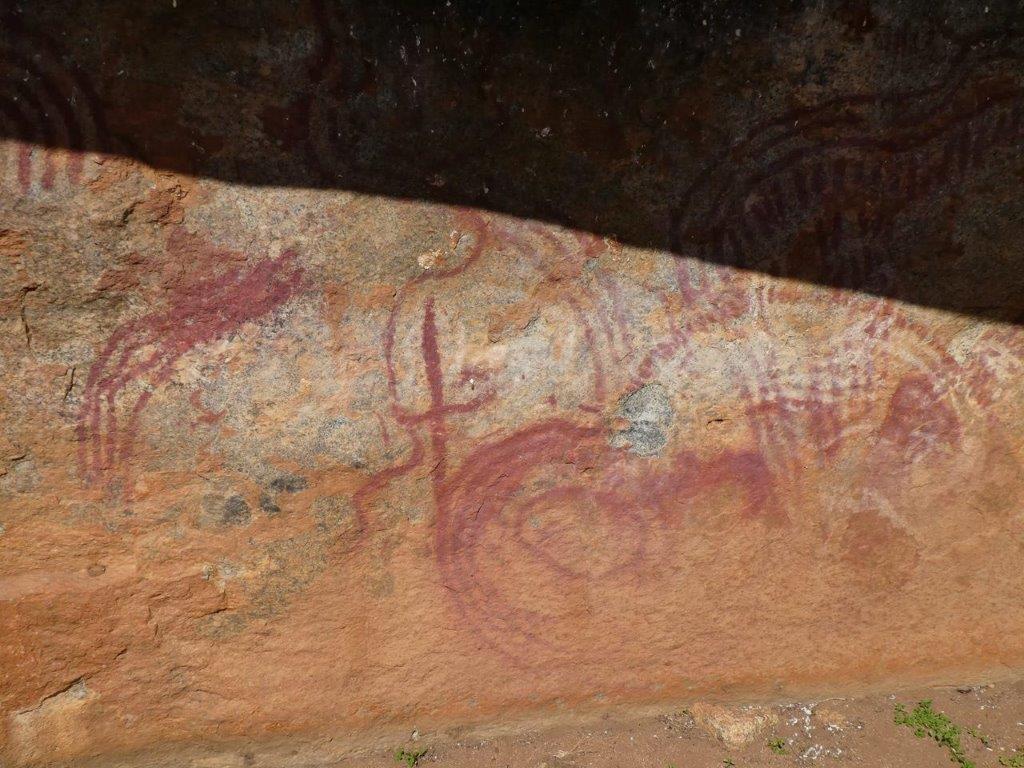
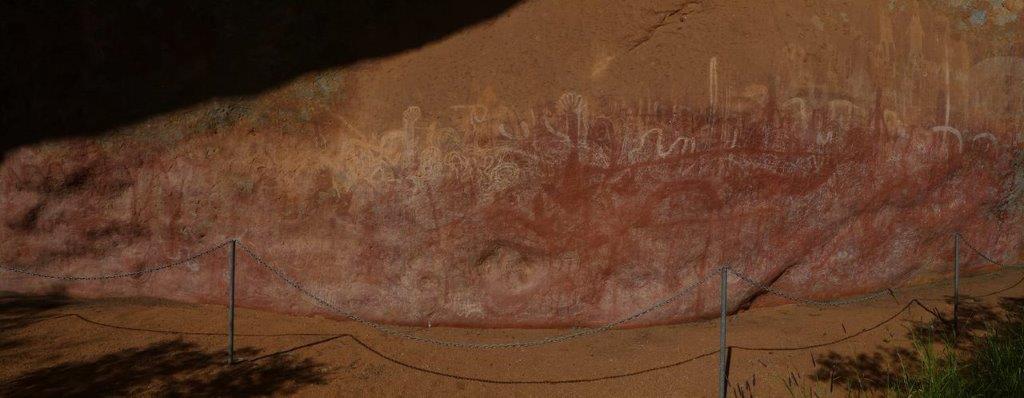
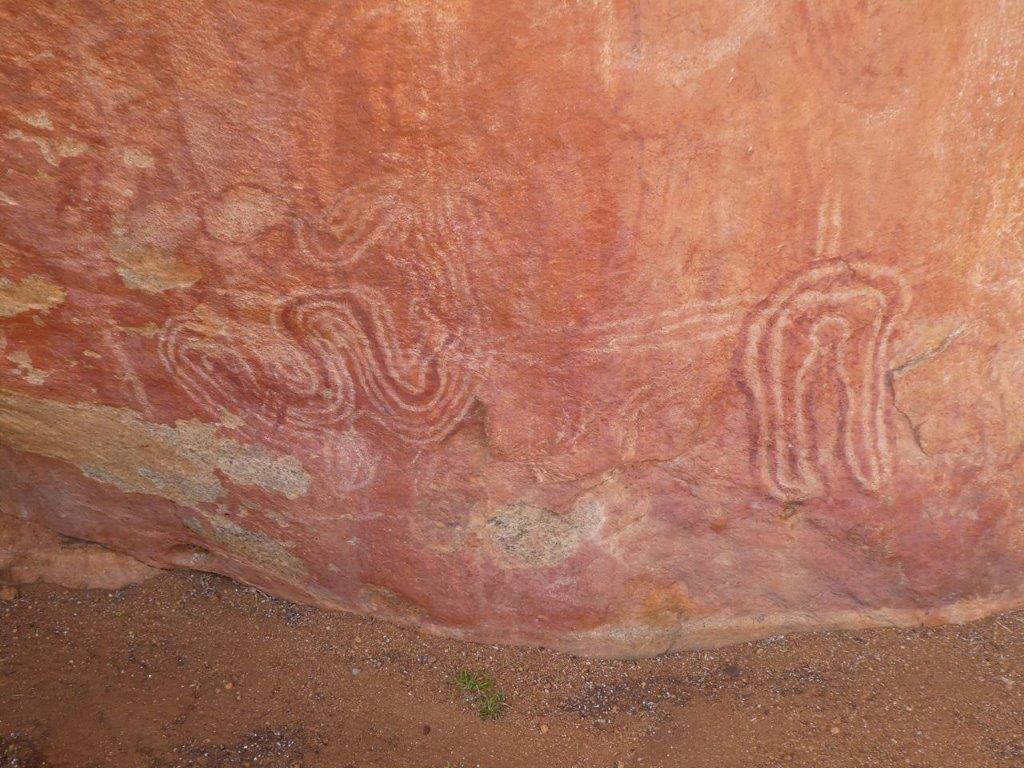
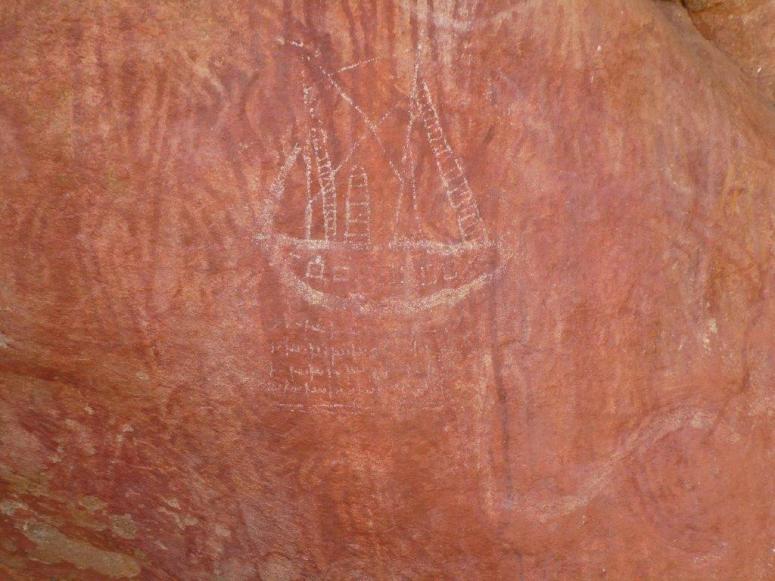
Now this is very interesting. At first sight you might put this down to fairly modern graffiti. However, there is writing underneath it, which doesn’t look like English.
If you expand the screen, you will see that the writing includes lots of long up and down strokes which are pretty typical of 16th / 17th century text.
Our theory, for what it’s worth, is that some explorers, possibly the Dutch, got this far from the coast, found the aboriginal artworks and decided to add their own.
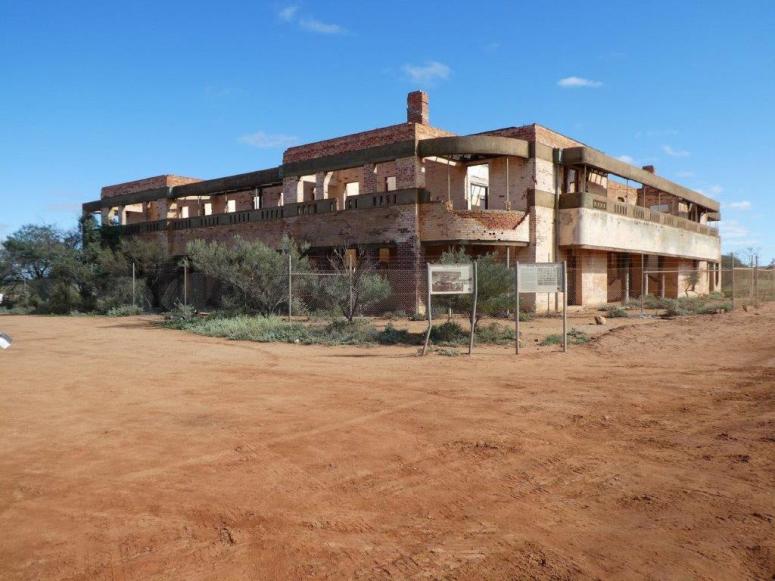
On the way back to Cue we dropped in at Big Bell, a goldmine which was working from 1935 until 1955. it shut down during the war but the returning soldiers and other previous workers and their families returned. There’s not much left now in the way of buildings as most of the materials have ‘salvaged’! All the streets are still obvious and you can see most of the concrete bases for the houses where the 5000 population lived. The one building that has survived is the Big Bell Hotel.
Monday 20th June
We decided on another day here in Cue going for a walk and generally taking it easy.
Tuesday 21st June
We’re heading north again and the next stop will be Meekatharra. It’s another old mining town that has seen better days but is kept alive by the bigger mines in the area and a fair amount of FIFO business. The airport is very good with 7000 and 5000′ runways, a result of wartime needs for the big bombers. The town has a well-stocked IGA and a bakery that actually makes it’s own bread and a centrally sited food van that makes ‘real’ coffee. All very tasty! What’s more we’ve been able to stock up on Times Crosswords because the newspapers come in every day, albeit the following day!
The town has tried to create some interest with signed walking and driving trails. Unlike Cue there are no stone buildings.
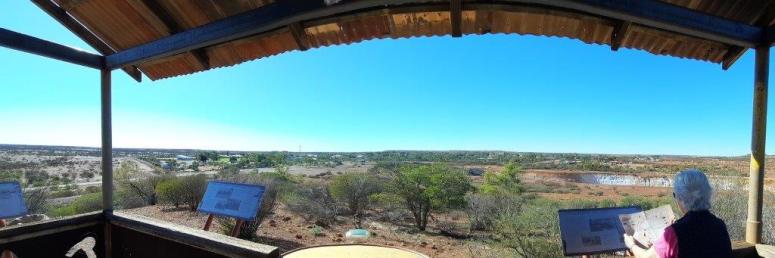
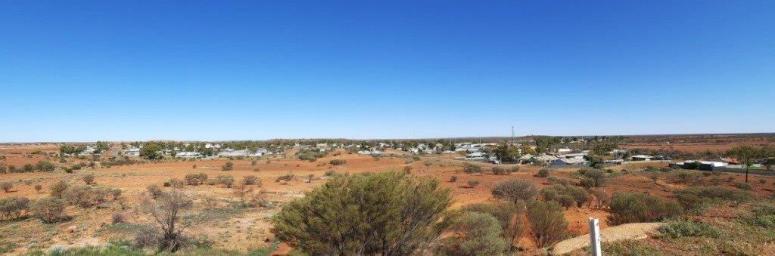
We found a very useful camping area about 4ks out of town. It is nice and flat, there is plenty of space, probably 25 acres in the part most people camp at but there is another area roughly the same size to the west.
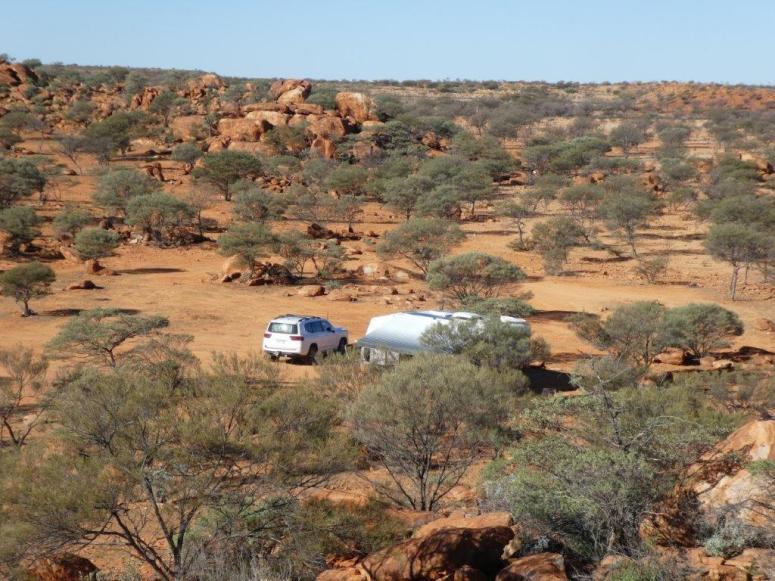
The camping area became known as Peace Gorge, after a huge picnic was thrown by the Shire to celebrate the end of WW1 and the return of it’s soldiers. It is a peaceful place and it has been easy to stay here for this length of time. Another ‘good to know of’ overnight stop off the Highway if needed in the future.
We seem to be, almost unintentionally, following a different travelling format so far, in as much that we are tending to stay for longer periods in the places we have found. Three nights at Lake Ninan, another three in Cue and now six here in Meekatharra.
We’ve found something to do every day, except today, Sunday, but we’ve both been busy with catching up on various tasks. We’ve done the walking trail along the creek and the one around the town centre and the driving trail. On the latter we discovered one of the three in Australia satellite tracking stations dealing with satellite phone calls. Also, one of the main RFDS stations and a meteorology weather station. Unfortunately we’d missed the daily balloon that goes up at 7.15am!
We’ve also walked round the camping area and climbed the rocks to get a viewpoint.
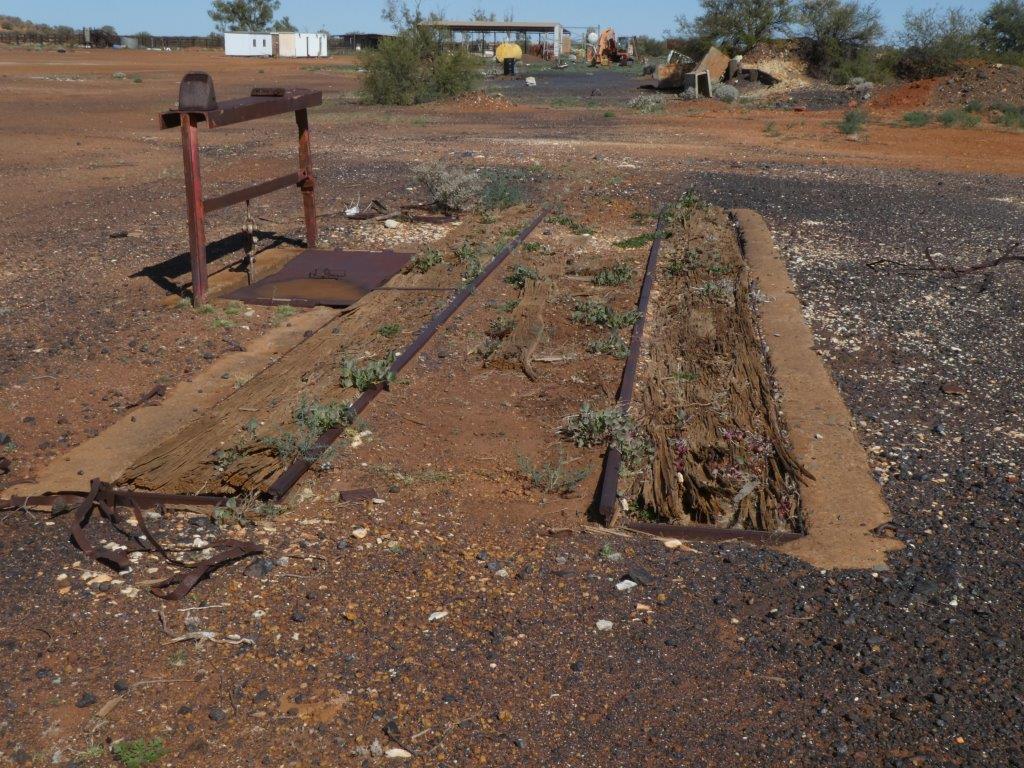
We found the old stockyards, which were used for cattle and sheep, some of which had been driven 1000s of kilometres by drovers who spent their lives doing this very arduous work. the mobs were then sent by train to the ports of Geralton and Freemantle.
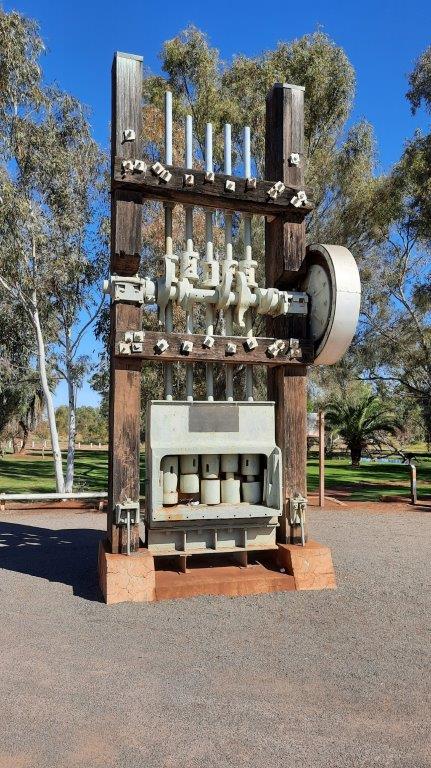
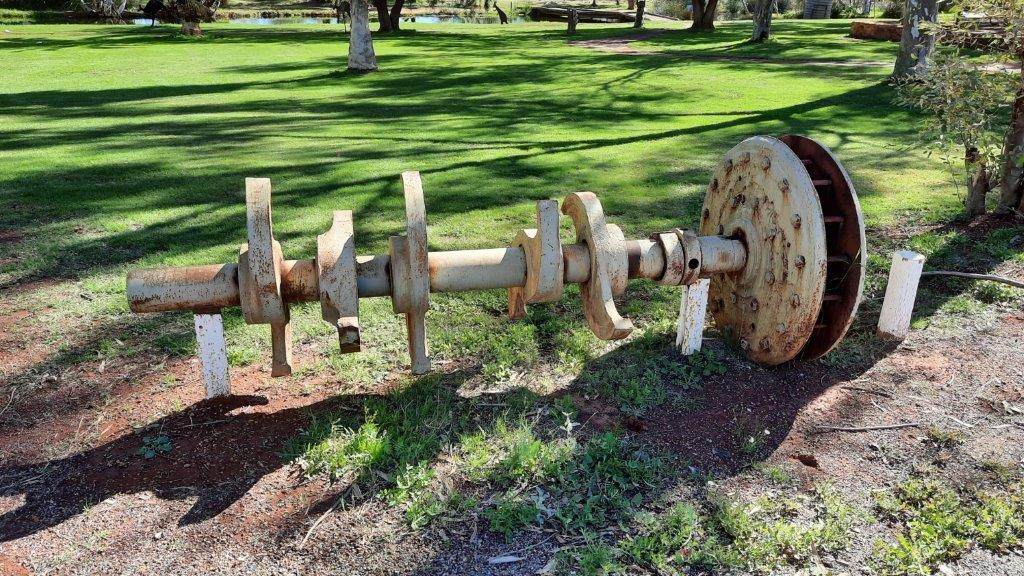
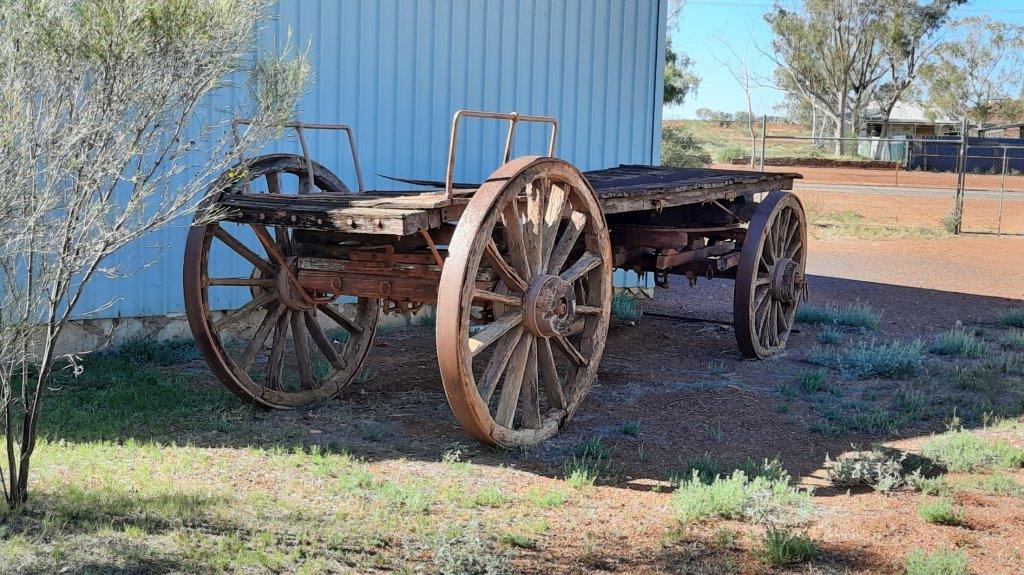
Clockwise from the left; a stamp mill for crushing (hopefully) gold-bearing rocks, a lay shaft for the mill and a typical example of the steel tyred wagons, thousands of which were the sole means of the bulk transport of people, goods, ore, i.e. everything. Drawn variously by camels, mules or oxen, depending on the conditions.
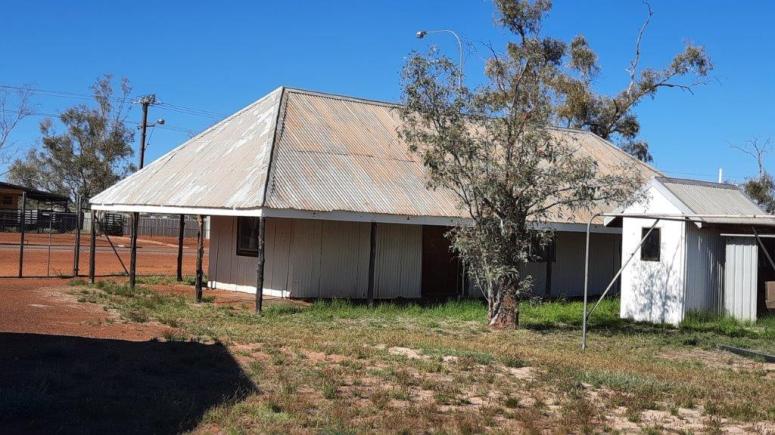
This is the Blacksmiths, believed to be the oldest building in Meeka’, dating from c1850′ and the earliest days of pastoral leases, for sheep and cattle and before gold was discovered here in 1894.
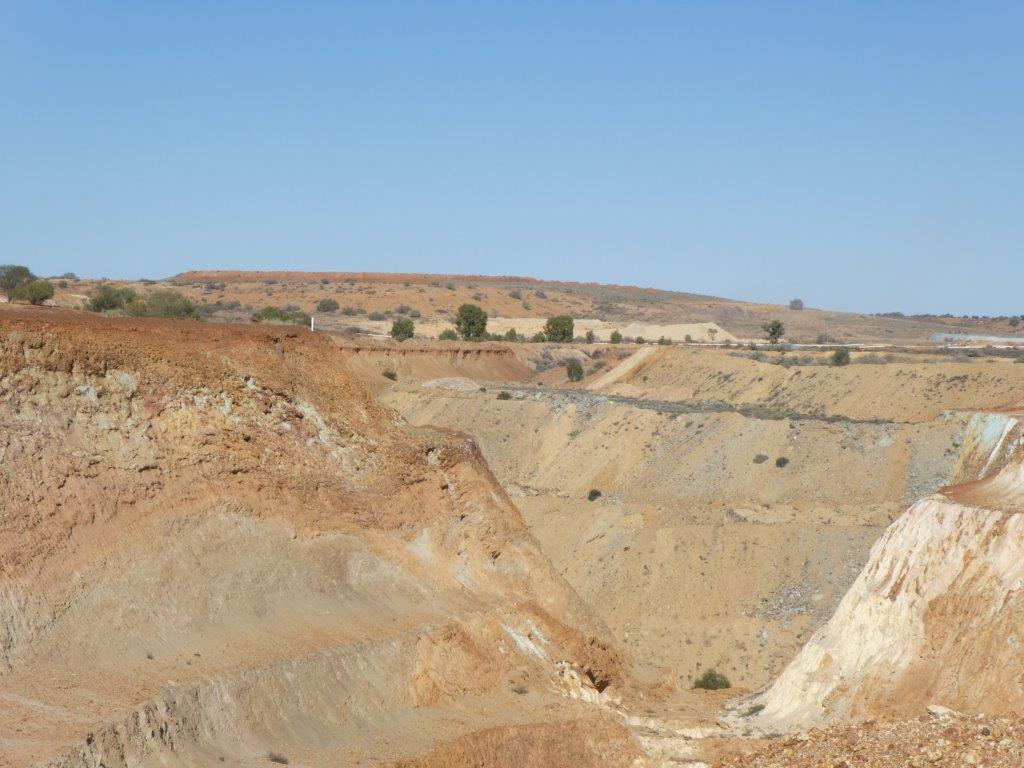
There’s a downside to these interesting old mine workings etc. Outside ‘Meeka’ is an old government owned Battery which was kept going into the 60s for the ‘little men’, the small miners who couldn’t afford their own stamp mills etc. Unfortunately, they have neither been kept for historical record of cleaned so the area looks like this……
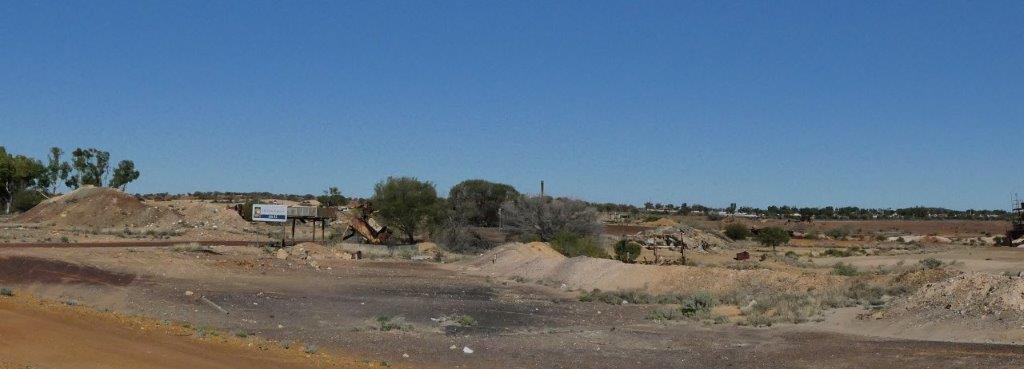
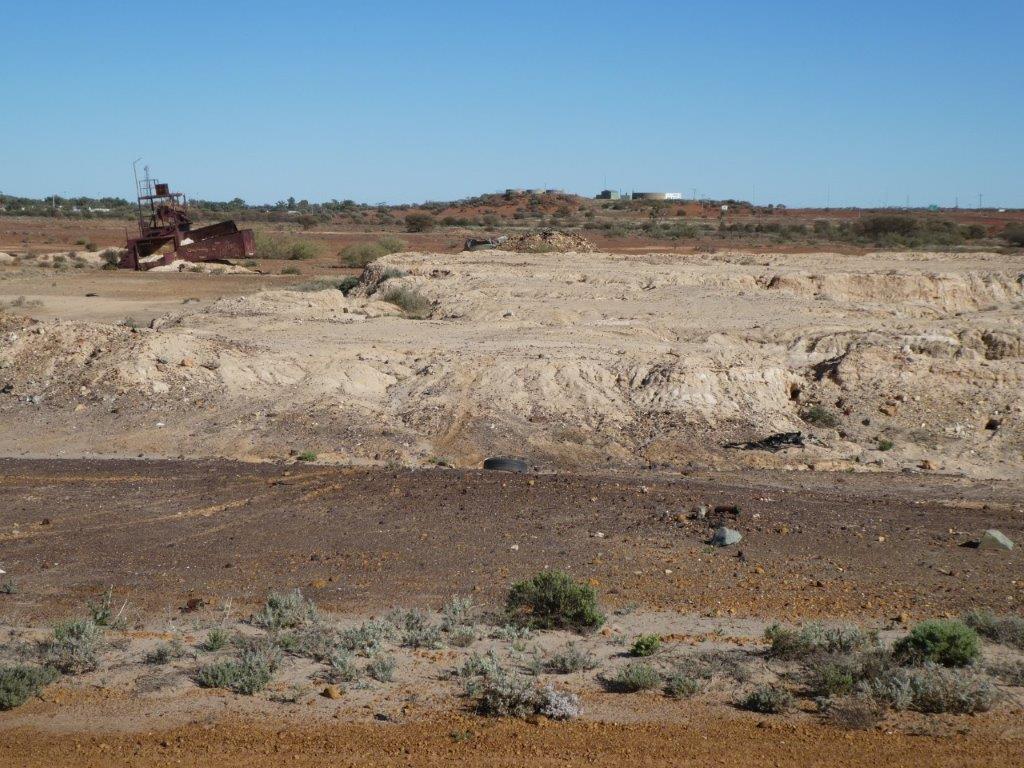
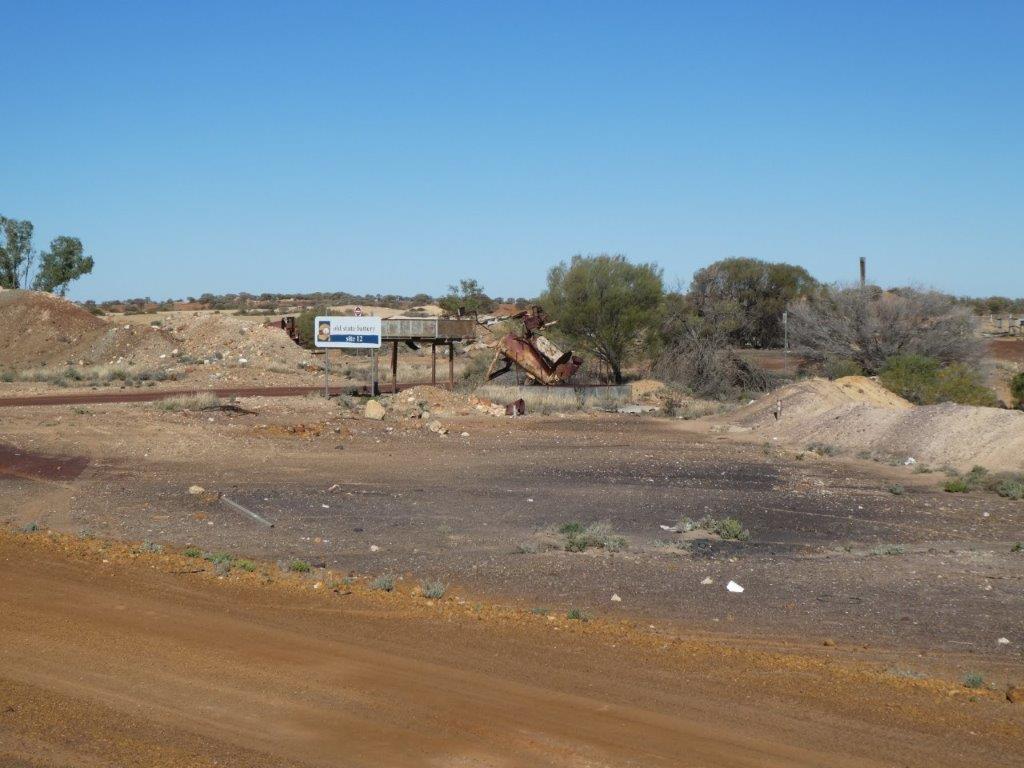
So there is just rusty junk everywhere. However, the biggest concern is that the leaching process involves considerable quantities of cyanide and mercury and how much of this is left in the mounds of filtrate (see the white mounds bottom left).


Great to hear/see that you are ‘back on the road again’. Hope Pat is fully recovered and that the new Landcruiser performs as well as the old Troopy! Watch those speed limits. Love to you both, Sparky & Gill.
Hello, yes Pat is fully recovered thank you. We’re still learning how the 300 works, at the moment i could do with fewer electronics! We’re beginning to sort out how good the dirt roads are after the rain and are hoping we’ll be able to get off the beaten track soon.
Stay safe.
P&R
PS I had to resize all the pictures in the blog to make it easier to download for some people, hence you may have a completely new blog, i’ve no idea how it works!!!